
Whenever the marketing world gets turned upside down – and AI has certainly done that – everyone starts asking the same question.
“What’s working right now?”
It’s a good question. Nobody wants to waste time on something that’s already stopped working.
The trouble is, it’s very easy to spend so much time chasing the latest tactic that you forget something much more important…
The tactics change all the time but the reasons people buy don’t.
That’s good news because it means you don’t have to start from scratch every time a new platform appears or another AI tool launches. If you understand why people buy, you’ll adapt to whatever comes next.
With that in mind, here are six things I don’t see changing any time soon.
1. Be clear before you try to be clever
One of the most common mistakes I see is people trying to make their marketing sound clever before they’ve made it understandable.
If somebody lands on your sales page, email or social post, they should know within a few seconds what you’re offering, who it’s for and why they should care. If they can’t, the clever headline won’t save you.
When I’m looking for inspiration, I still find myself going back to Harry Dry’s Copywriting Examples and Marketing Examples. He takes real examples, explains why they work and does it without disappearing into marketing jargon. If you’ve never looked at them, they’re well worth it:
Copywriting Examples
https://copywritingexamples.com
Marketing Examples
https://marketingexamples.com
2. Sell the change, not the thing
People don’t buy products. They buy what they hope those products will do for them.
It’s not about features like templates or a GPT. They’re all shortcuts to something people actually want whether that’s saving time, making more sales or finally getting unstuck.
Whenever you find yourself writing about features, ask yourself one question.
“So what?”
Keep asking until you reach something your customer actually cares about. That’s usually where your marketing should begin.
If you’re interested in the psychology behind all this, The Decision Lab has one of the best free libraries I’ve come across. It’s fascinating without being academic.
The Decision Lab
https://thedecisionlab.com
3. Trust is becoming more valuable, not less
If I had to pick one thing that’s changed over the last few years, it would be this. People are much more sceptical.
They’ve seen too many fake countdown timers, AI-written sales pages, testimonials that look suspiciously alike and screenshots that don’t really prove anything.
As a result, trust has become one of the biggest advantages you can have.
Baymard Institute has been researching online buying behaviour for years and one statistic has always stuck with me. A surprising number of people abandon a purchase simply because they don’t trust the site enough to enter their card details.
Showing your face, using genuine testimonials, answering awkward questions and generally behaving like a real human being does more for your conversions than most marketing tricks ever will.
See their research here:
Baymard Institute – Cart Abandonment Research
https://baymard.com/lists/cart-abandonment-rate
4. Make buying as easy as possible
You’ve persuaded someone they want what you’re selling. Don’t lose them because your checkout is annoying.
We’ve all done it. Started filling something in, hit yet another form or another unnecessary step and decided we couldn’t be bothered. That’s friction.
Baymard’s research suggests most websites could improve their conversions simply by making it easier to buy.
Every so often, I go through my own buying process pretending I’ve never seen it before. It’s amazing what you spot.
GoodUI is another resource I use regularly. It’s packed with real A/B tests showing what happened when people changed one small thing. You won’t agree with every result but it will certainly make you think.
GoodUI
https://goodui.org
5. Let other people do the persuading
You telling me your product is brilliant is marketing. Your customers telling me it’s brilliant is proof. There’s a world of difference.
Real reviews, names and results carry far more weight than another paragraph full of adjectives. If you’re looking for ideas, Really Good Emails is one of my favourite places to browse because it shows what companies are actually sending, not what they say they’re sending.
I’d also recommend Nielsen Norman Group if you’re interested in how people really read online. Their research is consistently good.
Really Good Emails
https://reallygoodemails.com
Nielsen Norman Group
https://www.nngroup.com/articles/
6. Build something you own
Platforms come and go and algorithms change, reducing your reach and impact. An email list is still one of the few assets you genuinely own.
It doesn’t have to be huge. I’d much rather have a few hundred people who open my emails because they trust me than thousands who only see my posts if an algorithm decides they should.
That’s one thing I definitely don’t see changing.
Your TED talk this week
If you’ve got fifteen minutes, I’d recommend Frances Frei’s TED Talk on rebuilding trust.
She says trust comes down to three things: authenticity, logic and empathy. Lose one of them and trust starts to wobble.
She was talking about leadership but I found myself thinking how well it applies to marketing. Every visitor who lands on your page is deciding whether they trust you before they decide whether they want your product.
You can watch it here:
One more thing
Looking back over everything I’ve written this week, I realised it all comes back to the same point.
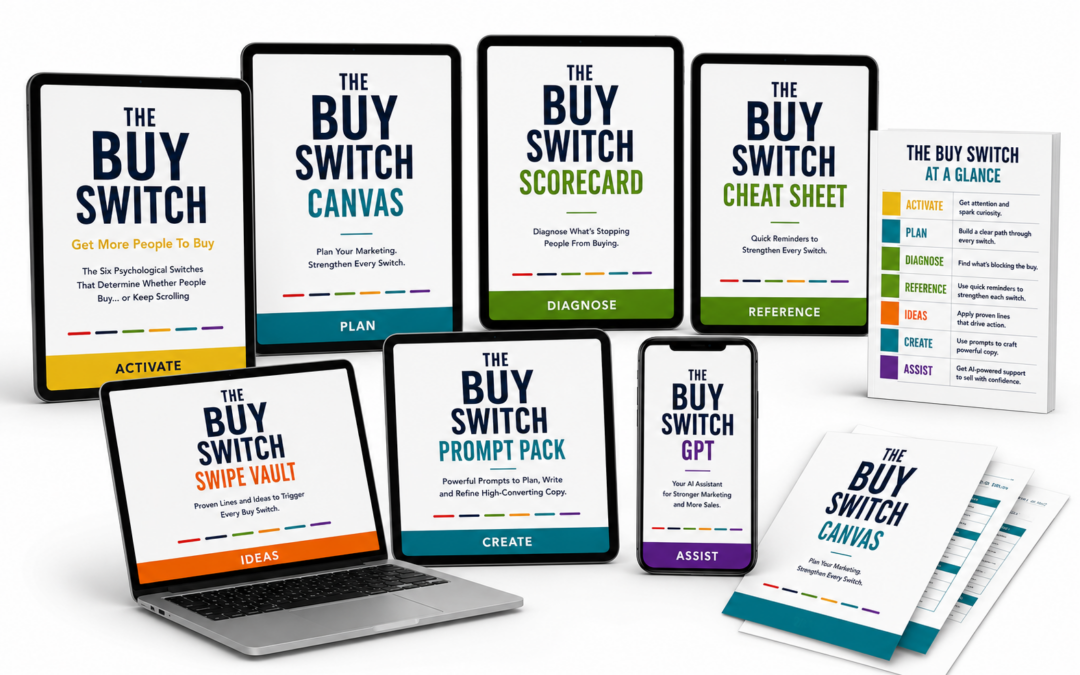
Most people assume the answer to poor sales is better copy. It can be but more often it’s understanding what’s stopping people buying in the first place. That’s exactly why I created The Buy Switch.
It’s the framework I use to work out what’s getting in the way before I start rewriting headlines or emails. Once you know the real problem, fixing it becomes a lot easier.
If you’d like to take a look, you can find it here: