
Years ago I spent months writing a book that barely sold. Around the same time, almost as an afterthought, I put together a short guide and sold it over and over without ever touching it again.
I know which one taught me the bigger lesson.
That little guide was my first proper taste of what a digital product can do. You make it once, and it keeps earning long after the work is finished. No stock to store, orders to pack or postage eating into your profits.
Digital products are one of the most sensible income streams going, especially now. And I’ve gathered some free tools to help you make your first one, or your next. These are mostly ones I don’t think I’ve sent you before so even if you’ve been at this a while, there should be something new here.
Why they work so well
A physical product has to be made again every single time someone buys it. A digital one doesn’t. That’s the beauty of it.
Your costs stay close to zero. Sell a printed book for $20 and materials, packing and postage take a real chunk out of it. Sell a $20 guide and almost all of it stays with you.
It also grows its audience in a near-passive way. Selling to one person takes the same effort as selling to a thousand because the file never expires and you don’t have to be there when it sells.
Then there’s the part most people miss. You already own the raw material. You know how to do something other people find hard and packaged up properly, that knowledge is the product.
Ideas that are working right now
None of these need any technical skill. Short guides and mini-ebooks that solve one specific problem well. Templates and printables that let people skip the blank page. Spreadsheets and trackers for budgets, content or habits. Notion templates you can build once and sell again and again. Short email challenges that feel generous but take an afternoon to make. And bundles, where a few small things become one better-value offer.
What they share is that they’re small and specific. Nobody needs another fifty-lesson course they’ll never finish. They need one thing that solves one problem today.
Start with what people already want
Before you make anything, spend a few minutes finding out what people are actually stuck on. Two free tools make that easy:
GummySearch. It lets you read what people say in Reddit communities about your subject, so you can spot the same problems and questions coming up again and again. That repetition, in their own words, is your product idea. Free to sign up and start digging.
Exploding Topics. One of my favourites for a good reason. It shows you topics that are climbing in interest before they become obvious to everyone else so you can get in early rather than late. You can browse the trends for nothing.
Making the thing
No design skills or expensive software required.
Reedsy Book Editor. A free writing tool that turns your words into a properly formatted ebook or PDF, the sort that looks like it came from a publisher rather than a word processor. Ideal for a short guide.
Photopea. A free, browser-based stand-in for Photoshop. Handy for covers, mockups and tidying up images without paying for a subscription.
VistaCreate. A drag-and-drop design tool with a free plan and a big library of templates for printables, planners and workbooks. An easier option if you’ve found other design tools fiddly.
Publuu. Turns a plain PDF into an interactive flipbook that readers page through in the browser. A small touch that makes a guide feel more finished. Free tier to try it out.
Where to sell it
You still don’t need a website. But if you’d like a bit more than a single payment link, these three are worth a look, and none of them cost anything to start.
Systeme.io. A storefront, a simple sales funnel and email, all on a free-forever plan with no cut taken on your sales. A lot of tools in one place for nothing.
Whop. A newer marketplace built for digital products and memberships, with its own audience already browsing for things to buy. Free to set up – they take a small percentage.
Creative Market. A large marketplace for templates and design assets, which means buyers are already there looking. Worth it if you’re making templates, planners or graphics. Free to open a shop.
Your TED talk this week
Try Something New for 30 Days – Matt Cutts
It’s barely three minutes long, so you’ve no excuse not to watch it. Cutts started giving himself small, time-limited challenges, thirty days at a time, and found he got far more done when the finish line was close and the task was clear. That’s exactly why short, defined projects get finished while open-ended ones drift on forever. You don’t even need thirty days for a digital product. You need a weekend and a deadline.
One last thing
None of the above counts for anything if the product never gets finished. That’s the real sticking point. Not a shortage of ideas but a pile of half-started ones. I spent years there myself, forever researching the perfect thing instead of making a real one.
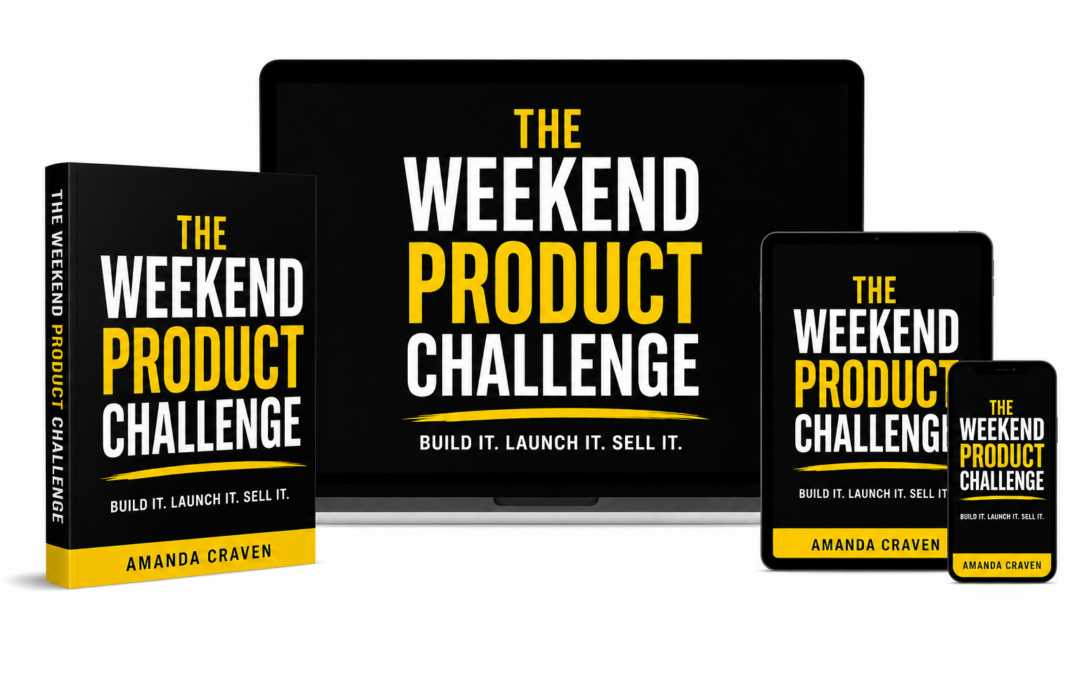
So I built something to fix precisely that. The Weekend Product Challenge walks you through creating one real, sellable digital product over a weekend (or a couple of days). You get a planner so you always know your next step, checklists for packaging and launching so nothing slips through, a step-by-step guide and a coach GPT to keep you going and help you out.
This is all about doing rather than just learning. By Sunday evening, you don’t just know more. You have something people can actually buy.
It’s currently way less than lunch and if you’ve read this far you’re exactly who I made it for.