
Yesterday, I showed you how changing just seven words in a sentence could make it much more compelling. And the reason it works is fascinating.
Our brains are constantly looking for answers. Give someone a question they desperately want answered, and you’ve got their attention. That’s the principle behind the curiosity hook I shared yesterday.
But getting someone’s attention is only half the battle. You also need to persuade them to DO something. And that’s where an awful lot of marketing falls apart.
You can have a terrific product, a beautifully designed sales page and a generous offer. But if your customer can’t see why they should care, they’re unlikely to buy.
I’ve spent years writing thrillers and one thing I’ve learned is that people don’t keep turning pages simply because a writer has put a lot of work into a book. They keep reading because they NEED to know what happens next.
Marketing works in much the same way.
The mistake that costs people sales
Imagine you’re selling a course that teaches people how to write a novel.
You could say:
Learn how to plan, write and edit your novel with our comprehensive step-by-step course.
Perfectly respectable. Also rather forgettable.
Now try:
You’ve had that novel in your head for years. What if you could finally write the first chapter this weekend?
See the difference?
The first describes the product. The second speaks to something the potential customer already wants.
And that’s one of the most important lessons in persuasion: people need to recognise themselves in what you’re saying.
They want to know that you understand their problem, their ambitions and what they’ve already tried.
Once they feel understood, they’re much more likely to listen.
Five ways to make your marketing more persuasive
1. Start with what your customer wants.
Don’t begin by listing everything your product contains. Think about the reason someone would want it in the first place.
Someone buying a meal-planning guide probably isn’t dreaming about spreadsheets and shopping lists. They want to stop standing in front of the fridge at six o’clock wondering what on earth to cook.
Sell THAT.
2. Make the benefit something they can picture.
Save time on marketing is vague.
Get tomorrow’s promotional email written before your coffee goes cold is much easier to imagine.
Specific details make an idea feel real.
3. Give people a reason to believe you.
Anyone can claim that something is brilliant.
Show people what it does. Give them an example. Demonstrate the result. Explain how it works.
If you’re promoting an affiliate product, tell people what caught your attention and why you think it’s worth considering.
And if you haven’t used it yourself, don’t pretend you have.
4. Deal with the doubts before they become objections.
Your potential customer may be wondering whether something will work for a beginner, whether it takes too much time or whether they’ll need expensive software.
Answer those questions in your marketing.
Sometimes the difference between a sale and an abandoned checkout is simply that nobody answered the question the customer was too embarrassed to ask.
5. Give people a reason to take the next step.
This is where curiosity comes back into play.
You don’t have to reveal everything in an email or social post. Give people enough to understand why something matters, then invite them to discover the rest.
But make sure the next step delivers on the promise you’ve made. Nobody enjoys being tricked into clicking.
Your persuasion exercise for this week
Find an email, social post or product description you’ve written recently.
Read the first two sentences and ask yourself:
Am I talking about what I’m selling, or am I talking about what my customer wants?
Then rewrite the opening from the customer’s point of view.
Here’s another example.
BEFORE:
My new guide contains 25 strategies for improving your marketing.
AFTER:
What if the reason people aren’t buying has nothing to do with your product?
Both could introduce the same guide but I’d put money on the second getting more attention.
Try writing three different openings for the same offer. One based on curiosity, one on a problem your customer recognises and one on a result they’d love to achieve.
You may be surprised how differently they read.
Six free resources to help you become more persuasive
I’ve found some resources that will help you study what gets people’s attention, improve your writing and understand how customers respond to your marketing.
1. Meta Ad Library – See how other businesses persuade people to click
https://www.facebook.com/ads/library
Search for products or brands in your market and look at the advertisements they’re running on Facebook and Instagram.
Pay particular attention to the first sentence. What promise, question or problem are they using to attract attention?
Remember, an active advertisement isn’t proof that it’s profitable but it’s a great source of inspiration.
2. Google Ads Transparency Center – Study how advertisers present their offers
https://adstransparency.google.com
You can browse advertisements from verified advertisers and compare the messages they use.
Look for the differences between ads that focus on features and those that make a specific promise.
3. TikTok Creative Center – Discover attention-grabbing approaches
https://ads.tiktok.com/business/creativecenter
Explore advertising examples, creative trends and popular approaches to short-form content. Some features may require a free login.
Even if you never intend to make a TikTok video, there’s plenty to learn about grabbing attention quickly.
4. Hemingway Editor – Make your writing easier to read
Paste in a piece of sales copy and see where your sentences may be too complicated.
You don’t need to accept every suggestion. I certainly wouldn’t. But it’s a handy way to spot passages that make readers work harder than necessary.
5. Microsoft Clarity – See how visitors interact with your website
This free website behaviour tool includes heatmaps and session recordings.
If you have your own website, it can help you discover where visitors click, how far they scroll and where they appear to struggle.
That’s valuable information when you’re trying to improve a sales page.
6. Google Trends – Find out what people are already interested in
Compare search terms, explore related topics and see how interest changes over time.
It’s particularly handy when deciding which benefit or angle to emphasise in a promotion.
The more you understand what people are looking for, the easier it becomes to speak their language.
This week’s TED Talk
Rory Sutherland – Perspective Is Everything
Rory Sutherland is one of my favourite thinkers on advertising and human behaviour.
In this talk, he explores how changing the way something is presented can completely alter how people perceive its value.
It’s funny, thought-provoking and a wonderful reminder that the way we communicate something can be just as important as the thing itself.
Want to get REALLY good at this?
There’s a reason I’ve been talking about persuasion this week.
I’ve been digging into some of the storytelling and psychological techniques that make people pay attention, become curious and want to discover more.
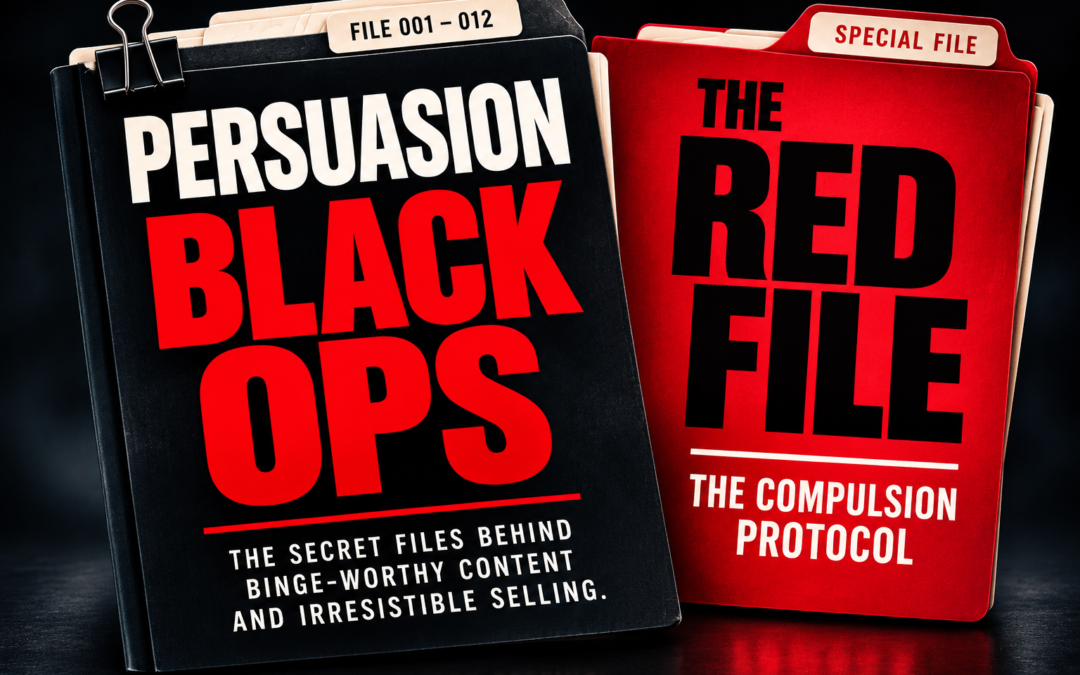
And I’ve collected 12 of them, complete with practical examples and ready-to-use AI prompts, in my new Persuasion Black Ops.
These are techniques you can put to work in your emails, social posts, sales pages and affiliate promotions.
If you enjoyed yesterday’s seven-word example, just wait until you see what else I’ve uncovered.
But here’s the thing…the price is going up with every sale. So if you’ve been thinking about grabbing it, I’d do it now. Waiting won’t get you a better deal!
Get it before the price goes up again
And coming later this week…
Now, there’s another side to all this. You can write the most persuasive email in the world, but it won’t make you a penny if nobody sees it.
Which brings me to something else I’ve been working on…
With Black Friday approaching, I could have put together a bundle of my existing products and offered you another bargain.
But I’ve decided to do something different…
I want to give you something brand new that you can put to work straight away to help get more potential buyers looking at your offers.
Whether you’re an affiliate marketer, a product creator or an author, I think you’re going to love this one too. I’ll be telling you much more about it on Thursday.
Until then, have a wonderful week!