
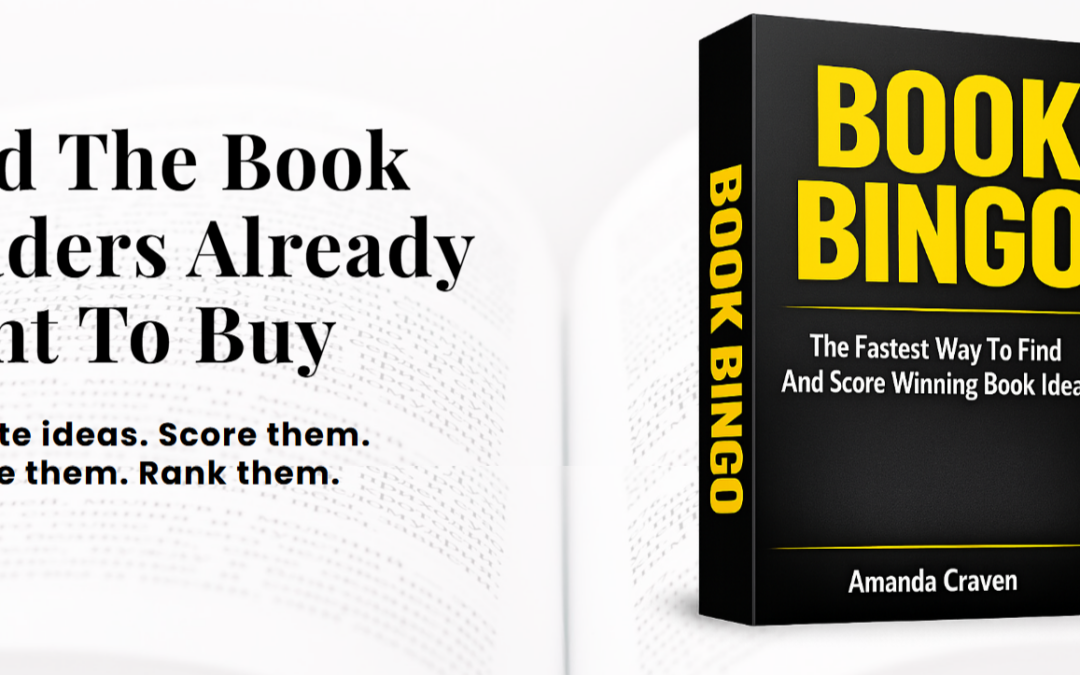
One of the questions I’ve been asked most since this morning is:
“Where did the idea for Book Bingo come from?”
The honest answer is that it wasn’t really an idea at all. It was a habit.
For years, probably without even realising it, I found myself asking the same questions every time I started thinking about a new book.
Not can I write this? I can write almost anything if I put my mind to it.
Instead, I’d ask things like: Is there a clear audience for this? Does it fit a genre readers already understand? Could it become more than one book if I wanted it to? And perhaps most importantly…does it feel strong enough to justify the next few months of my life?
Those questions have become almost automatic over 27 years. I’d never actually written them down. They simply became part of the way I think.
When AI arrived, I had one of those lightbulb moments. Instead of using it to write books, why not use it to help make better decisions before the writing even starts?
That’s how Book Bingo came about. It teaches and applies a framework that’s lived in my head for a very long time.
Whether you decide to use Book Bingo or not, borrow one idea from it.
The next time you’re excited about a new book, don’t ask yourself whether you can write it.
Ask yourself whether it’s the best opportunity available to you right now.
It’s a very different question.
This Week’s Resources
Article: 5 Research Steps Before Writing Your Book Proposal – Jane Friedman
Jane is one of the most trusted voices in traditional publishing and this piece does something most writing advice skips entirely – it shows you how to evaluate whether your idea has a viable market before you invest months writing it.
Comparable titles, audience research, where you fit on the shelf. Free, practical, and worth bookmarking regardless of how you plan to publish.
https://janefriedman.com/5-research-steps-write-book-proposal
Free tool: Amazon Best Sellers Rank Calculator – Kindlepreneur
Before you commit to a book idea, it’s worth knowing whether books like it are actually selling.
Find any competing title on Amazon, scroll to the Product Details section to get its Best Sellers Rank and paste it into this calculator.
It will tell you roughly how many copies that book sells per day. It’s free, takes about two minutes and really helps give you a clear overview.
https://kindlepreneur.com/amazon-kdp-sales-rank-calculator
Free tool: Answer the Public
This is one I use regularly. Type in any topic and it shows you the actual questions real people are searching online – questions like “how to,” “why does,” “is it worth” – pulled straight from search engine autocomplete data.
For writers, it’s a fast way to find out whether there’s genuine public curiosity around your idea, and what angle would resonate most. Three free searches per day on the free plan.
Free tool: Google Trends
Completely free and easy to use. Type in your book topic and see whether interest is growing, declining, or seasonal. You can compare multiple topics side by side, filter by country and look back years.
It won’t tell you everything but if your idea is trending upward, that’s useful to know. If it peaked in 2019, that’s useful to know too.
Free resource: Kindlepreneur – Free Author Tools Bundle
Dave Chesson has built one of the best free resources for indie authors and this particular bundle includes tools to help you validate your book idea, understand your market and plan your launch. All free.
If you’re serious about choosing the right idea rather than just the most exciting one, this is worth spending an hour exploring.
https://kindlepreneur.com/freebies/bundle
Podcast: The Creative Penn – Joanna Penn
Joanna has spent years at the intersection of creativity, publishing, and technology and it’s one of the few podcasts I still make time for regularly.
Particularly useful if you’re thinking about where AI fits into your writing process – she’s thoughtful rather than either evangelical or panicked about it.
Free resource: Kindlepreneur – How to Choose Amazon Book Categories
Bear with me on this one. You might think categories are something you worry about after the book is written. They’re not.
Understanding which categories exist, which are competitive and which have room for a new entrant tells you a lot about the commercial landscape for your idea before you write a word.
https://kindlepreneur.com/how-to-choose-the-best-kindle-ebook-kdp-category
Book: The War of Art – Steven Pressfield
Not because it will tell you what to write, but because it deals with why so many good ideas never make it into finished work.
Pressfield names the enemy “Resistance” – that internal force which convinces you the timing isn’t right, the idea needs more thought, or you’re not quite ready. Understanding what you’re up against is half the battle.
TED Talk: The Surprising Habits of Original Thinkers – Adam Grant
This one connects directly to the question Book Bingo is built around. Grant studies people who consistently generate strong, original ideas and what he found isn’t what you’d expect.
They don’t wait for the perfect idea. They generate more ideas than anyone else, including more bad ones, and they’re better at knowing which to pursue.
If you’d like to take a look at Book Bingo, you can find it here: