
Wow – what a week!
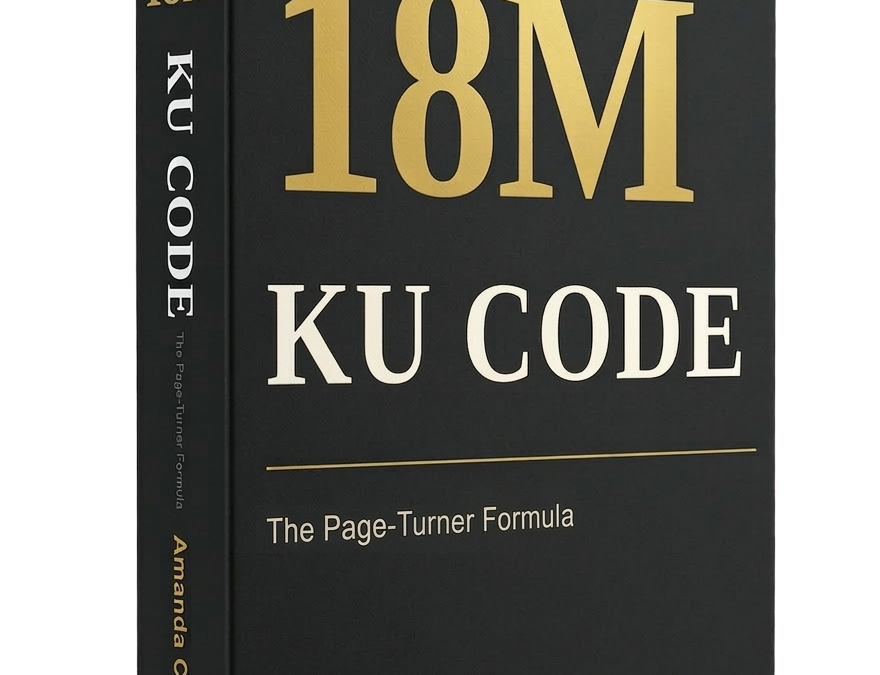
The 18M KU Code went live and within a few hours it was sitting at no. 1 on WarriorPlus. Which is lovely, obviously….
But it also made me want to share one of the secrets behind it.
Because it doesn’t just apply to Kindle books. It applies to every single thing you write online – emails, subject lines, sales pages, social posts, lead magnets, video scripts…you name it.
And once you see it, you can’t unsee it.
It’s called the contradiction technique. And it’s the reason some writing stops people in their tracks while other writing gets scrolled past without a second glance.
Here’s how it works.
Your brain is a pattern recognition machine. It’s constantly predicting what comes next. And when something matches the prediction, it relaxes and moves on.
But when something contradicts what it expected? It snaps to attention because it needs to resolve the tension.
Think about the difference between these two subject lines:
“How to write better emails”
versus
“The email that got a 70% open rate – and I wrote it in four minutes.”
The second one creates a contradiction. Four minutes shouldn’t produce a 70% open rate. But it did. And now you have to know how.
You can do this in a single line, a subject line, the start of a video…
The format doesn’t matter but that contradiction does.
Now, the contradiction technique is a very good tool. It’s the hook and it gets the door open.
What actually keeps people reading – keeps them turning pages, clicking through and buying – is something deeper. It’s understanding.
Real, specific, almost uncomfortable knowledge of who your reader is, what they’re afraid of, what they’re secretly hoping for and what they need to feel before they’ll trust you enough to take the next step.
The contradiction gets the attention. The empathy earns it.
This is true whether you’re writing a book, a sales page, an email sequence or a social media post.
Techniques are learnable in an afternoon. Understanding them at that level takes longer but it’s also how you get real results.
A question from a reader
I got this in my inbox today from someone who picked up the 18M KU Code this morning:
“Does this work for fiction as well as non-fiction?”
I loved getting this question because the answer is that it’s actually based on my fiction books.
The 18,132,527 page reads didn’t come from non-fiction guides. They came from novels. Stories that contain characters people can’t leave alone.
The contradiction technique, the emotional engineering, the chapter ending system – all of it was developed by watching what happened when readers couldn’t stop turning pages in fiction and then understanding why.
The principles transfer perfectly to non-fiction because they’re not about genre. They’re about how readers experience any piece of writing – what makes them stay, what makes them stop and what makes them come back.
Fiction readers and non-fiction readers have the same human brains. They respond to the same things.
So yes – the 18M KU Code works for fiction and non-fiction equally. If anything, fiction writers often find it works even better because the emotional architecture is already part of how they think about story.
The 18M KU Code is built around both of these things – the technique and the understanding – applied to Kindle books specifically. But the principles underneath are the same ones that drive everything else. If you want to see exactly how it fits together, you can take a look here.
Now, here’s what’s also worth a look this week…
Your TED talk this week is The Art of Persuasive Storytelling with Kelly D. Parker.
A marketing professional with nearly 20 years of experience breaks down why stories are the most powerful tool in any business owner’s kit and gives you a four-step framework to use them. She makes the case that understanding your audience’s problem and pursuit has to come before you open your mouth.
This is practical, warm and immediately useful. Watch it here:
Read
8 Ways to Show Empathy in Your Marketing Copy – Sarah Klongerbo
A clear, honest piece on the thing most copywriting advice skips: that knowing your audience and truly feeling them are two different things. The Ann Handley formula quoted in here is worth writing on a Post-it and keeping on your desk:
Copywriting Fundamentals: 15 Traits of Excellent Copy is a goodie from HubSpot with a particularly strong section on leading with empathy rather than the pitch. The Nike “Winning isn’t for everyone” example alone is worth the read.:
https://blog.hubspot.com/marketing/good-copywriting-practices-list
10 Ways to Write Hooks (with examples) – Neal O’Grady. This is an in-depth breakdown of hooks analysed from thousands of viral posts. The section on contradicting things your reader already believes is the practical version of what I’ve written about above:
https://www.nealsnewsletter.com/p/10-ways-to-hook-people-with-examples
How to Write a Killer Hook in Your Sales Copy – Alex Cattoni is one of the best copywriting teachers around. This is a strong, accessible piece on attention and retention first – the right way to think about it.
Copywriting Techniques: What CopyCon 2024 Taught Us. A really readable breakdown of juxtaposition, the List & Twist and other techniques that all use the contradiction principle in different ways. Good real-world examples throughout.
https://www.munro.agency/copywriting-techniques
Use
Hemingway App – Free in-browser tool. Paste in your sales copy or email and it shows you exactly where your writing needs work:
CoSchedule Headline Analyser – Free tool that scores your subject lines and headlines. Run your contradiction hook through it and see how it performs.
https://coschedule.com/headline-analyzer
Answer The Public – Free (limited daily searches). Type in your topic and see every question your reader is already asking. This is where you find the contradictions that already exist in your audience’s mind – the things they assume are true that you can flip.